6. The Person of Peace
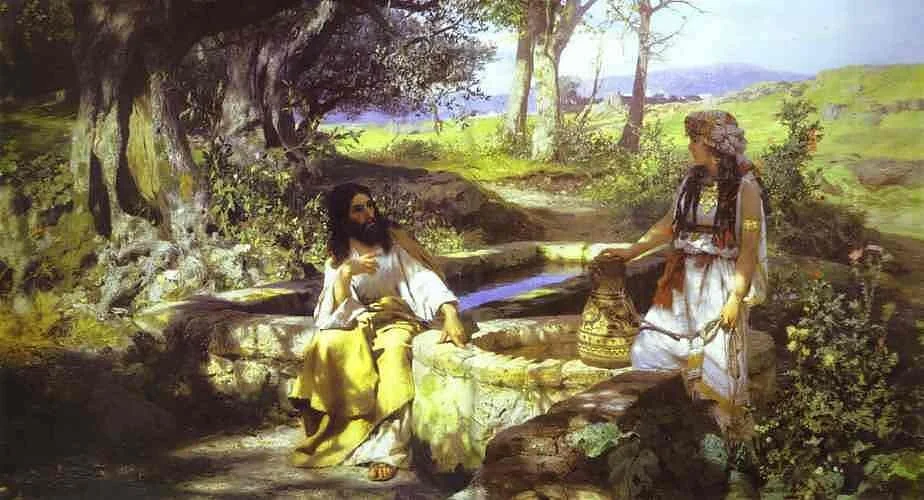
Jesus and the Samaritan Woman, 1890 - Henryk Siemiradzki
The sixth of ten studies from Everywhere: How God Multiplies Disciples and Churches.
In Laos, Peter went looking for a person of peace—a receptive individual who would open the door to their community. Peter found this person in Daw, who then secretly gathered other families to hear what Peter came to share. Daw became the first disciple in his village. As Peter continued to train and disciple him, Daw grew into the village’s first evangelist, disciple maker, and church planter. The outcome was an indigenous movement of disciples and churches.
Peter pursued this strategy by following the model Jesus set. Near the end of Jesus’ journey to Jerusalem, to fulfill his mission to seek and to save the lost, Jesus deliberately invited himself to stay at Zacchaeus’s house (Luke 19:1–10). When Jesus left, Zacchaeus remained as a transformed witness to his community. Jesus modeled what he taught his disciples to do. His encounter with Zacchaeus parallels the instructions he gave to the Seventy-Two before sending them out (Luke 10:1–11; 19:1–10). The purpose of their mission was to find receptive households before moving on to the next village.
Following the day of Pentecost, the movement of God spread from Jerusalem to Rome primarily because Jesus’ disciples followed his example and teaching about using receptive households as doorways into communities.
Author David Matson points out that in Acts, “Household conversion stories provide several firsts in bringing salvation to the unreached peoples of the world: the first Gentile man (Cornelius), the first Gentile woman (Lydia), the first pagan (the Roman jailer), the first synagogue ruler (Crispus). Their conversions led to even more Gentiles coming to faith. Each resulted in a new church.”
These examples from Acts demonstrate a consistent principle: People are more likely to adopt the faith of those closest to them. As the number of converted friends and family increases, the likelihood of conversion increases. But there is more to it than good sociology. It’s consistent with who God is. God is Father, Son and Holy Spirit—eternally in community. Made in his image, we are social beings. That’s why the gospel spreads through social networks as God goes before the messengers, preparing the way. God led Jesus to both Zacchaeus and the woman at the well, preparing their hearts for their encounter with Jesus. Similarly, God prepared both Peter and Cornelius for their meeting, ensuring that Peter arrived to a full house of Cornelius’s friends and family—a gathering that made church formation far more likely.
We see this played out in movements today. In Indonesia, workers prioritize households and groups rather than individuals. In Lebanon, Ibrahim repented and believed and followed Jesus. He was a person of peace, having been spiritually prepared and waiting for the messenger God had promised to send. At first, his family was suspicious, but they were won over once they saw his transformed life. One by one, they joined him, and the gospel spread throughout his clan. From this receptive household, the movement grew to other clans and networks across the region. Every multiplying movement I know employs this principle.
For individual and group study:
Read Acts 16:6–40.
What do we learn about God from this story?
What do we learn about people?
What do we learn about movements and the person of peace?
What do you need to do to obey what you’ve learned?