Jesus is the true and better Adam who passed the test in the garden and whose obedience is imputed to us.
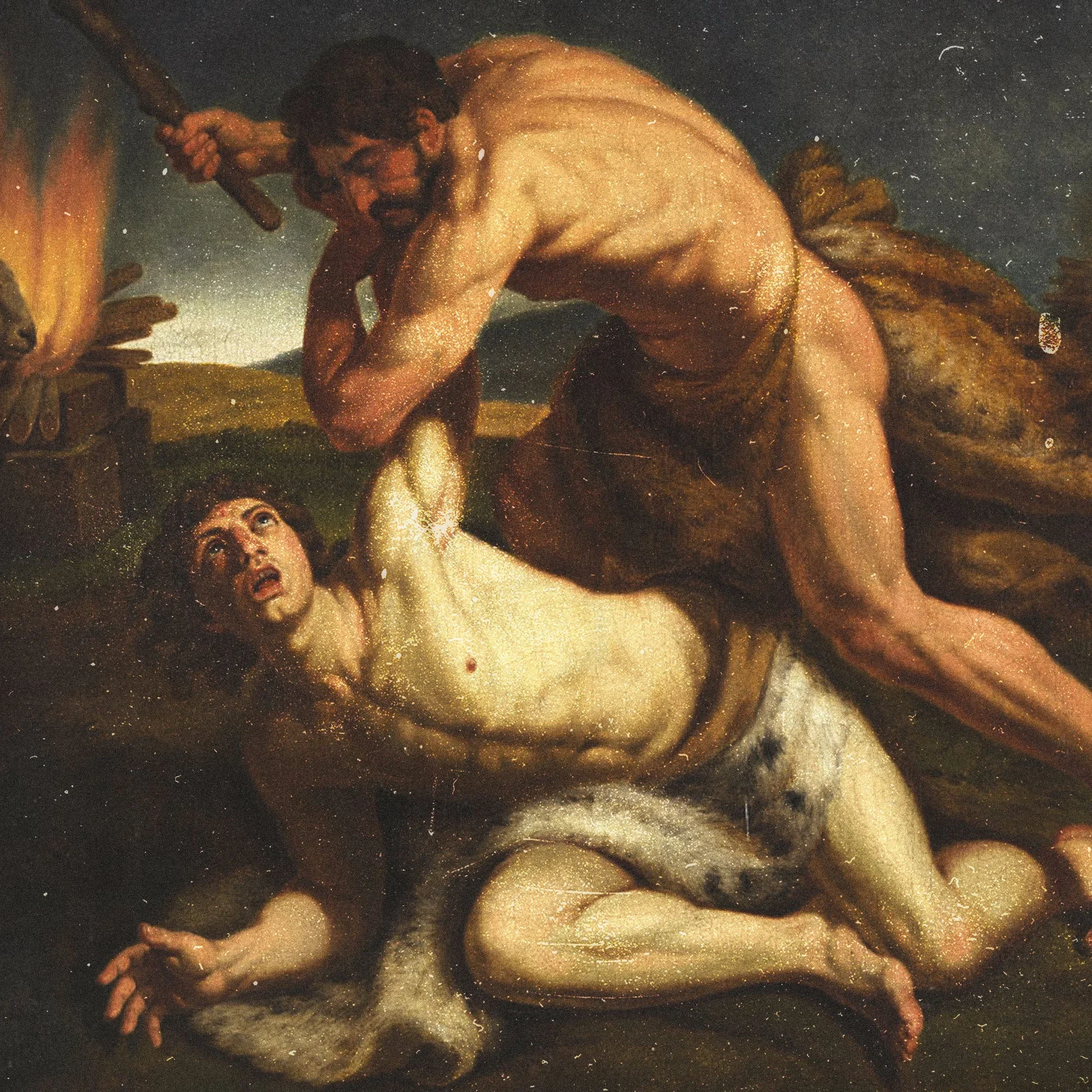
Jesus is the true and better Abel who, though innocently slain, has blood now that cries out, not for our condemnation, but for acquittal.
Jesus is the true and better Abraham who answered the call of God to leave all the comfortable and familiar and go out into the void not knowing wither he went to create a new people of God.
Jesus is the true and better Isaac who was not just offered up by his father on the mount but was truly sacrificed for us. And when God said to Abraham, “Now I know you love me because you did not withhold your son, your only son whom you love from me,” now we can look at God taking his son up the mountain and sacrificing him and say, “Now we know that you love us because you did not withhold your son, your only son, whom you love from us.”
Jesus is the true and better Jacob who wrestled and took the blow of justice we deserved, so we, like Jacob, only receive the wounds of grace to wake us up and discipline us.
Jesus is the true and better Joseph who, at the right hand of the king, forgives those who betrayed and sold him and uses his new power to save them.
Jesus is the true and better Moses who stands in the gap between the people and the Lord and who mediates a new covenant.
Jesus is the true and better Rock of Moses who, struck with the rod of God’s justice, now gives us water in the desert.
Jesus is the true and better Job, the truly innocent sufferer, who then intercedes for and saves his stupid friends.
Jesus is the true and better David whose victory becomes his people’s victory, though they never lifted a stone to accomplish it themselves.
Jesus is the true and better Esther who didn’t just risk leaving an earthly palace but lost the ultimate and heavenly one, who didn’t just risk his life, but gave his life to save his people.
Jesus is the true and better Jonah who was cast out into the storm so that we could be brought in.
Jesus is the real Rock of Moses, the real Passover Lamb, innocent, perfect, helpless, slain so the angel of death will pass over us. He’s the true temple, the true prophet, the true priest, the true king, the true sacrifice, the true lamb, the true light, the true bread.
Much of our discussion on mission in the west assumes Jesus delegated the task to his followers, and then left them to fulfil it.
Pick up any popular book on church growth, church planting or missional church, and the assumption is that we are the ones who have to work this thing out. The assumption is that there is always something we can do to “fix” things. Guess who’s at the centre of the universe?
Luke has a very different view. If it was up to the disciples to take the gospel to the world, the movement Jesus founded would have run out of gas. Left to their own devices, Peter and Andrew would have gone back to their fishing business, and the others would have done likewise.
Instead it’s the risen Jesus who picks up the pieces, he brings his disciples back together, he teaches them about the kingdom, and commands them to take the gospel to the ends of earth. He sends the Spirit to help them get there.
The book of Acts is first of all about what Jesus does. Even though he has ascended to the right hand of the Father, he is still active on earth.
Experiencing the reality of the risen Lord and surrendering to his leadership is the key to fulfilling our calling.
UPDATE: I’ve pulled the pdf article I wrote for this post. Michelle said it needed some more work and I agreed. It will be back soon.
Here’s the story of Rita an impoverished yet rich messenger of the gospel. The Great Commission will not be fulfilled by relying on Western paid and Western educated professionals.
It’s going to take an army of ordinary people just like Rita—filled with the Spirit, confident in the gospel, and obedient to Jesus.
I’ve been in the book of Acts for at least a year now. Here’s the heart of what I’m learning—mission is not about us. It’s about the continuing ministry of the Risen Lord.
Luke is the only Gospel writer who also wrote an account of the spread of the gospel through Jesus’ first followers. Luke’s Gospel prepares the way for the book of Acts. They are two parts of the one story and Jesus is the central figure in both.
Jesus’ ministry did not end with his death, resurrection and ascension. He did not hand his ministry over to his followers and leave them to continue on alone. Jesus is alive and continues to minister through the disciples after his death and resurrection.
What Yahweh was to Israel in the Old Testament, Jesus is to the church in the book of Acts. The Risen Lord is on center stage as Luke tells the story of early Christian mission.
Jesus is alive and leads his followers as the gospel spreads from Jerusalem to the ends of the world. He commands them to go. He sends his Spirit to empower them for witness (Acts 1:8; 2:33). He inspires their preaching (7:55-56). He brings people to faith. New disciples are baptised in his name.
He calls and commissions his witnesses (9:5-6; 22:14-21). His disciples operate by his power, and not their own authority (3:6). He leads them into new missionary challenges (10:13-15; 11:20-21, 24). He confirms their preaching with miracles performed in his name (9:34; 14:3). When they are persecuted, he comes to them and encourages and protects them (18:9-10; 23:11; cf. 22:17-21).
His followers, empowered by the Spirit proclaim his word, and the result is an expanding movement of new disciples and churches.
So what’s our role? We live and minister as though Jesus is alive, and despite the obstacles, we expect his word to grow, and spread, and multiply all over the world, and as it does, new disciples are made and new churches are formed.
By 2050 the planet will be home to more than 9 billion people. The population of Africa is projected to at least double by mid-century to 2.1 billion. Asia will add an additional 1.3 billion.
Tell me, does the way you make disciples right now have any chance of keeping up?
A few weeks ago I was in a workshop listening to workers from around the world report in on progress in fueling church planting movements.
One of them served in a hostile environment. He had seen a number of movements among different people groups. Exciting stuff, until new believers started disappearing.
In one case a whole family was never seen or heard from again. They were either murdered, or lost somewhere in the prison system. Nobody knows.
About twenty minutes later in the workshop a visitor raised a concern regarding rapidly expanding movements. He told us he had heard they are not “deep”.
I didn’t get a chance to ask him what “deep” meant. I was just stunned that such a question could be asked of people who were laying down their lives for the sake of the gospel.
Deep can mean different things to different people—mature, knowledgable, wise. In church planting movements, “going deeper” means learning to obey what Jesus commanded.
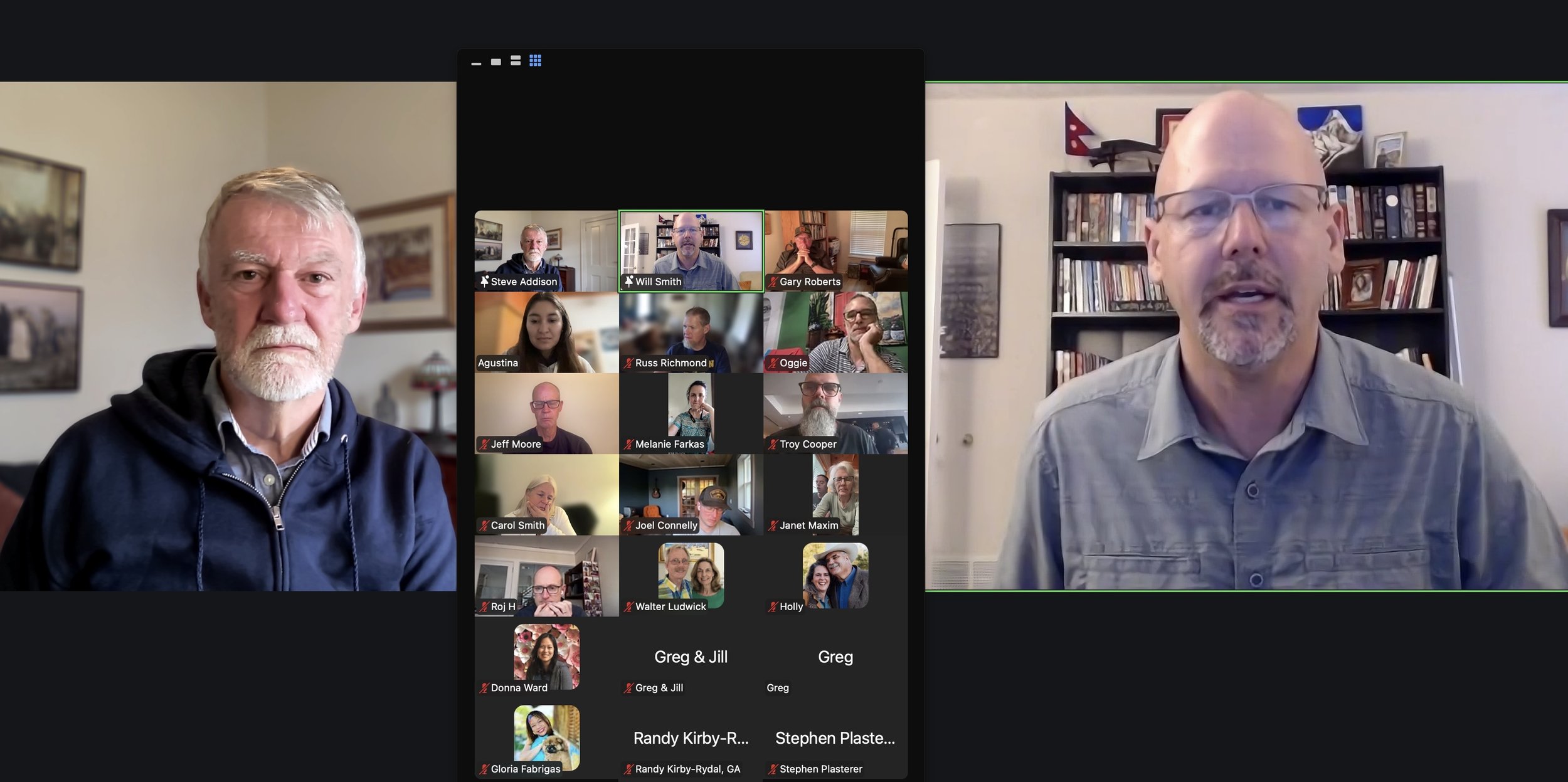
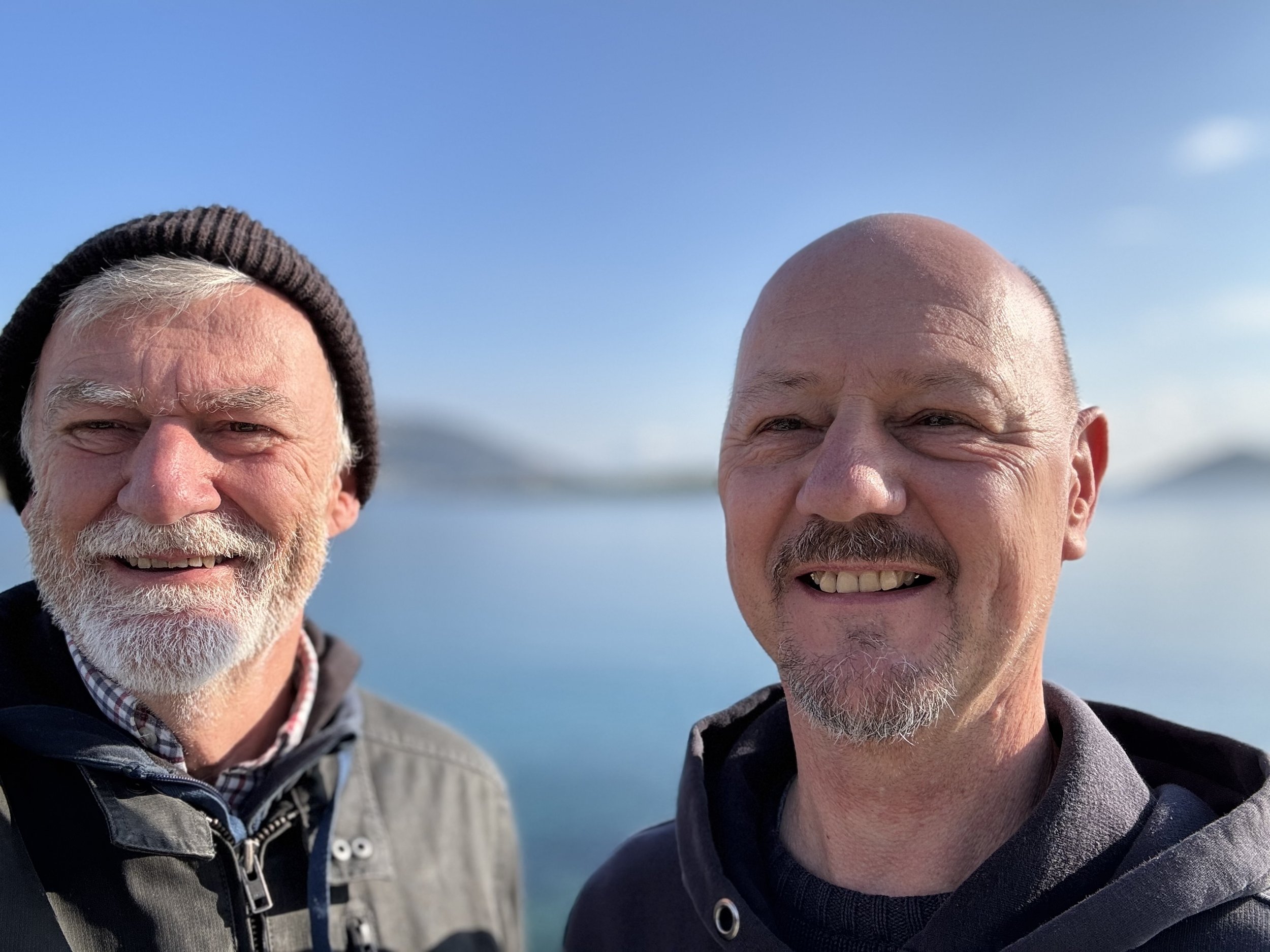
I’m in Sydney this week hanging out with the Acts29 church planting guys (above). They call it a “bootcamp” but the food is great, and no one has yelled at me yet.
Also catching up with some early adopters who are learning how to fuel church planting movements.
Last stop tomorrow is SMBC where I’m teaching a class on Movements.
I keep meeting people who God is stirring up about fuelling movements of disciples and churches. There’s still a long way to go, but there is now a steady stream of people coming to know Christ right across the country. This is what I signed up for.
Tim Keller writes on what makes a movement, and how movements can resist becoming institutions.
Defining a movement
A movement is marked by an attractive, clear, unifying vision for the future together with a strong set of values or beliefs. The content of the vision must be compelling and clear so that others can grasp it readily.
By contrast, “institutionalized” organizations are held together by rules, regulations, and procedures, not by a shared vision.
Unpacking the definition
1.The vision leads to sacrificial commitment. Individuals put the vision ahead of their own interests and comfort.
2. The vision leads to generous flexibility. Institutionalized organizations are very turf conscious.
3. The vision leads to innovativeness. Institutions are organized more vertically, where ideas from “below” are unwelcome.
4. A movement is marked by spontaneous generativity. Spontaneous combustion means energy generated from within – a conflagration without the need for external ignition.
How movement institutionalize
Vision becomes strategy, roles become tasks, teams become structure, networks become organizations, recognition becomes compensation.
How movements stay strong
A strong movement occupies the difficult space between being a free-wheeling organism and a disciplined organization. A movement that refuses to take on some organizational characteristics – authority, tradition, unity of belief, and quality control – will fragment and dissipate. A movement that does not also resist the inevitable tendency toward complete institutionalization will lose its vitality and effectiveness as well.
“A thoroughly readable description of the dynamics of missionary movements, as well as how to initiate, maintain, and extend them.” —Alan Hirsch
“I had to read it through in a single sitting.” —David Garrison
“Steve identifies the core characteristics of movements in a way that enables all of us to understand.” —Bob Roberts
“Steve synthesizes his vast amounts of experience, wisdom, and research into an easy-to-read book.” —Neil Cole
“Every so often a book comes along that fuels the flame that was started in my heart years ago. I love this book!” —Floyd McClung
“I couldn’t put it down till it finished rearranging my mind. This is a keeper!” —Ralph Moore
“Steve taps into the heart hunger of the growing number of us that want to see God do something great.” —Ed Stetzer
“Practitioners and thinkers with a passion for mission will want to read and re-read this book.” —Martin Robinson
“An important book for our times...” —Bob Logan
“...filled with stories that keep the pages turning with a message that is both simple and profound...” —Roger Thoman
“Thanks for rewarming our hearts and revitalising our minds and spirits about what needs to be done, and how it should be done.” —Bill Muehlenberg
“...an excellent popular introduction to the concept of movements...” —Justin Long