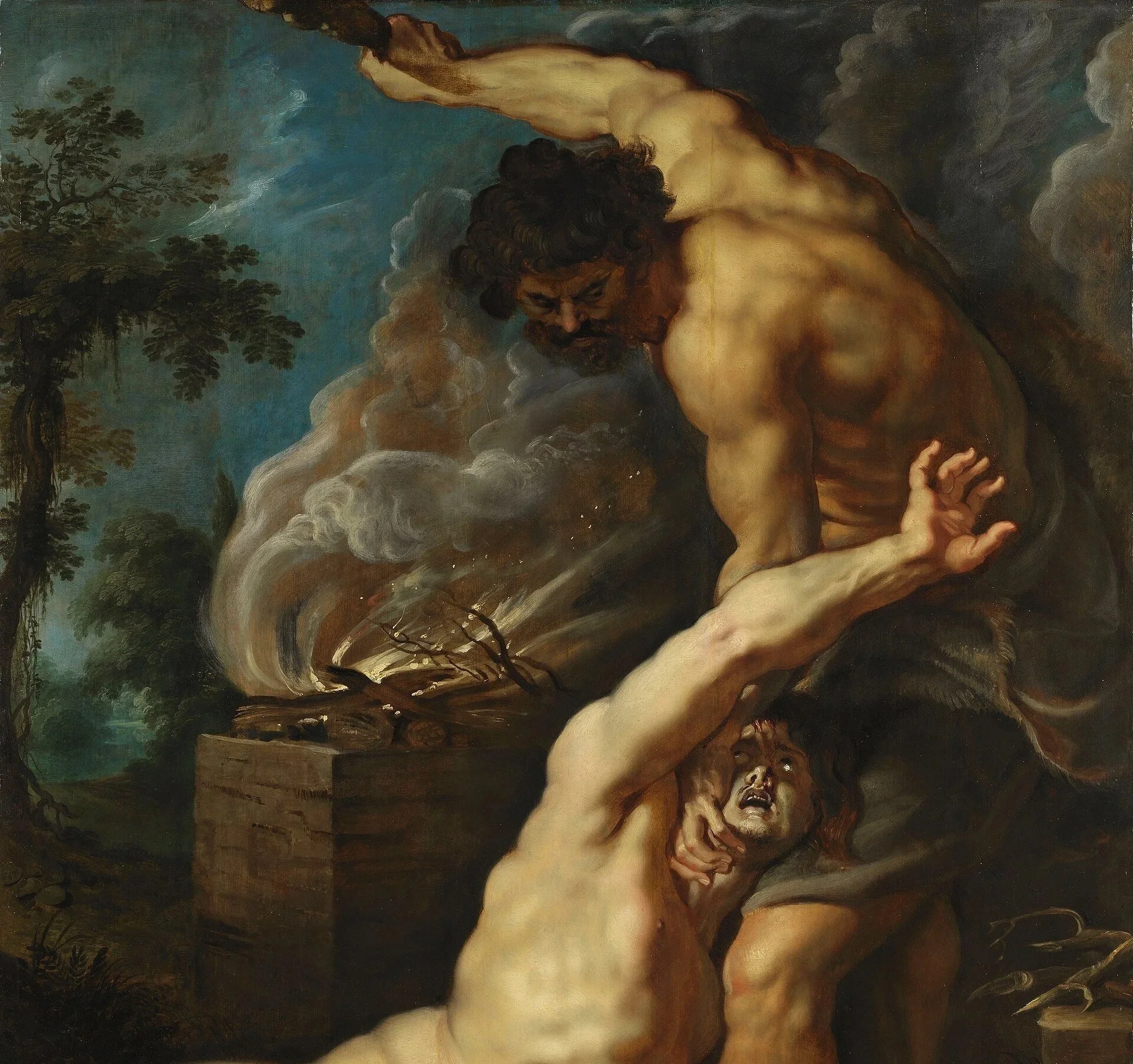
Cain slaying Abel, by Peter Paul Rubens, c. 1600
Do not be like Cain, who belonged to the evil one and murdered his brother. And why did he murder him? Because his own actions were evil and his brother’s were righteous. Do not be surprised, my brothers and sisters, if the world hates you.
1 John 3:12-13
My field research for the book, Everywhere, has got me thinking about the relationship between movements of disciples and churches and persecution. I’m going to explore that theme for a while and see where it goes. We’ll start with the first biblical account of persecution.
In Genesis 3, following the fall from God’s grace, God banished the man and the woman from paradise, stationing an angel to block their return. Life continues, yet it does so under the shadow of God’s judgment and human sin.
In Genesis 4, with God’s help, Eve gives birth to Cain, their firstborn, and then to Abel. Abel becomes a shepherd, while Cain works the ground.
Though there is no return to the garden and humanity remains under God’s curse, they are not abandoned. The possibility of a relationship with God still exists. The two brothers approach the Lord with offerings: Cain brings produce from the soil, while Abel offers the fat portions from the firstborn of his flocks.
God welcomes Abel’s offering but rejects Cain’s. In response, Cain is consumed by fury and discouragement. God asks him, "Why? If you do what is right, will you not be accepted? Sin is like a wild animal crouched at the door, but you must master it."
Why was Abel’s offering accepted while Cain’s was rejected? In itself, produce is a legitimate offering. The cause of rejection lies not in the gift, but in the heart of the giver. Hebrews reminds us that only Abel’s sacrifice was offered in faith (Heb 11:4).
God’s word to Cain was not a call to improve the quality of his offering, but a warning to guard his heart, lest sin destroy him. Cain ignored God’s warning and, in a fit of jealous rage, murdered his brother.
Unable to strike God directly, he chose to kill the one God loved.
When Adam first sinned, the Lord came searching for him, asking, "Where are you?"
Now the Lord searches again, asking Cain, "Where is your brother?" God knows the answer, yet he offers Cain an opportunity to confess and turn toward forgiveness.
Cain answers first with a lie—"I don’t know"—and then with defiance: "Am I my brother’s keeper?" This response reveals the heart that poisoned his original offering.
Abel’s innocent blood cries out to God from the ground, demanding justice. Though Cain has murdered his brother, God spares this unrepentant killer. Nevertheless, there are consequences. God curses Cain and the ground he works—the first time a human is directly cursed by God. Driven from the land, Cain becomes a restless wanderer upon the earth.
Even then, Cain thinks only of himself, yet God mercifully places a mark of protection upon him.
Then Cain went out from the Lord’s presence.
In this narrative, the spotlight remains on Cain—the world’s first murderer and the first persecutor of God’s people. Abel, the first martyr, is silent. His blood cries out, but his voice is never heard.
Abel dies accepted by God, yet unlike Cain, he receives no mark of protection. His murderer is allowed to live. This incident illustrates how persecution is fundamentally an attack on God by way of attacking His people.
It is an attempt to defy the Creator by those who have rejected grace and are ruled by sin.
God’s faithful people often suffer injustice. God did not intervene to protect Abel or prevent his death. He allowed it to happen.
The one true God stood by while Cain did his worst. The first human family was torn apart by hatred, yet God refrained from intervening. He rules over a world where His people remain vulnerable to those who reject Him.
This serves as a profound lesson: even a murderer is not beyond God’s mercy and protection. God is gracious. He could have justly punished Cain’s sin with immediate death, honoring the warning given to Adam and Eve: "...when you eat from it you will certainly die" (Gen 2:17).
They lived, though death entered the world. The same God who extended grace to the first parents extends grace to their firstborn.
Persecution exists because God is gracious. While God can certainly destroy the persecutor—as seen with Herod (Acts 12:19–24)—He often extends grace instead, as seen with Saul (Acts 9:4–7).
Cain is allowed to live in the hope that he too might one day find the forgiveness and divine approval that his brother once enjoyed.